… but method matters too

As I wrote yesterday, for those of us who are Kingdom writers, writing because we have a message of hope and love to share with the lost and weary world, we should not disqualify ourselves from writing just because we are not award-winning, brilliantly skilled writers. Our message of hope has power to reach hearts, even if we feel unqualified to write well. The Holy Spirit dwells in our words and loves to use them to change people’s lives. So please, never let your lack of ability/ confidence stop you from telling your story.

BUT…

That said, I do need to be real. Self-published books still have rather a bad reputation. And in some cases it seems to be because their authors finished writing their first draft and thought they were done. Without the support and experience of a writing community, they treated their first draft as a finished book, uploaded it to KDP and hit ‘publish’. It’s easy enough to do, and at least the message is out there. So it’s not a terrible thing to do. However, in this they are doing themselves, their readers, and self-published authors everywhere a disservice. I have to be honest, because I really want to be helpful: I have read many self-published and even hybrid-published books that made me sad because they are not very well written. I’m not looking for literary brilliance – that would make me a total hypocrite – but whether it’s because there is no coherent structure, or the syntax is confusing, or the spelling and grammar mistakes keep tripping me up, reading a poorly written book can become a chore rather than a pleasure. And even if the reader makes it to the end, the struggle to stick with it gets in the way of them receiving the book’s message or put them off buying any future books by the same author. And that is sad.

So yes, I still maintain that message matters most, but method does matters too, so I wanted to share a little hard-earned advice with any first-time writers out there. As a writer, you are most likely the only one who can tell your story, and I want to encourage you to go for it – but just please don’t do it alone. We function best in community, as a body, and God has placed others around you who can and would love to help you do tell your story as well as possible.

So here is my advice to emerging writers – the method I recommend and personally follow…

1/ Write your first draft. Whether you are a pantser or a planner, enjoy it – this is the fun part. But do NOT rush to publish. You will naturally want to get it out there to your readers asap, but speed is not your friend here. So stop.
2/ Put your manuscript in a drawer/ save it to your computer – with a backup copy – and do not look at it for a month. Honestly, you need time to forget what you wrote.
3/ After a month, re-read it for yourself. You are more likely to spot errors and issues now.
4/ Edit heavily. Be brutal with cutting out the parts you enjoyed writing but that don’t actually contribute to the story.
5/ Find beta-readers* to read it and give feedback – expect this to take a couple of months.
6/ Edit again based on your beta feedback. If there were a lot of changes needed, repeat stages 5 and 6.
7/ (optional) Approach trusted people for endorsements – people you know will actually read it and be honest in their praise. (I struggle with this step as it’s hard to find people who don’t feel obliged to write something positive even if they didn’t think it was great).
8/ Send to a proof-reader – even if you are good at it yourself, proof-reading one’s own work is notoriously difficult.
9/ Get help at a professional standard** with formatting and cover-design.
10/ Now you can upload to your chosen platform and hit ‘publish’.

*Good Beta-readers – the ones who give constructive criticism and encouragement – are one of the most important resources a writer can have. They are your ‘practice readers’, likely to spot any problems that others would notice, just before you publish. Sending your manuscript to beta-readers can be nerve-wracking at first because our fragile egos don’t want them to spot errors in all our hard work. But the more books I publish, the more I want them to find mistakes, as that helps me not to publish something I will come to feel embarrassed by. So a few tips in finding beta-readers:
1/ Have at least one beta-reader who is your Mum/ sibling/ best friend, who you know will tell you it’s brilliant, regardless – we all need cheerleaders to encourage us to keep going.
2/ More than half of your beta-readers need to be published writers themselves, with the experience to recognise common issues that non-writers might not spot. There will be people willing to do this for free (or for a reciprocal arrangement) in your writing community, so ask around! If you don’t have a writing community yet, hop over to Kingdom Story Writers on Facebook – or the Association of Christian Writers. I have found both to be really helpful and supportive.
3/ Assuming you are writing a Kingdom book (i.e. with a Christian message), have at least one beta-reader who you trust as having sound theological understanding, who can help you identify and straighten up any issues that might be Biblically inaccurate/ confusing.

**Obviously not everyone can afford professional formatting, cover design etc. There are actually very reasonable cover-design services out there, and those experienced in publishing who can help with formatting, so if you have no budget for these processes don’t just ignore this step, but seek advice from others in the writing community.

Once you have followed all those steps, congratulations! You worked hard, received help, didn’t quit, and are now a published author! Honestly, your book may or may not be award-winning – personally I still don’t believe mine are technically that brilliant – but at their heart is the message of the most true and glorious Kingdom gospel, and that’s what matters most to me. And thanks to all those who helped me, they are written to the best of my ability right now so as many readers as possible can receive the message within. So if you have enlisted the help of other experienced writers, you will also likely have produced a book that has a good message and is written well enough to make it accessible to many readers. The rewards you will receive for that are eternal, and that is something to rejoice over! Well done, good and faithful servant.

message matters most…

(I can’t decide whether I love an alliterative title or am irritated by them. Mine was accidental, but nonetheless, I’m sorry if you belong to the irritated gang. Thanks for not letting it put you off!)

Recently I entered a writing competition run by Sue Sutherland of www.leavingbethany.com. It’s not something I tend to do because – well – imposter syndrome. Basically, I don’t believe I’m that good a writer. I will accept that I may be better than the average person, but in competition against other writers? I don’t think so. Even in the books that I have published, I still struggle with an unescapable feeling that they could be so much better if I knew what I was doing. So I tend not to enter competitions, assuming that someone better and more deserving will inevitably win.

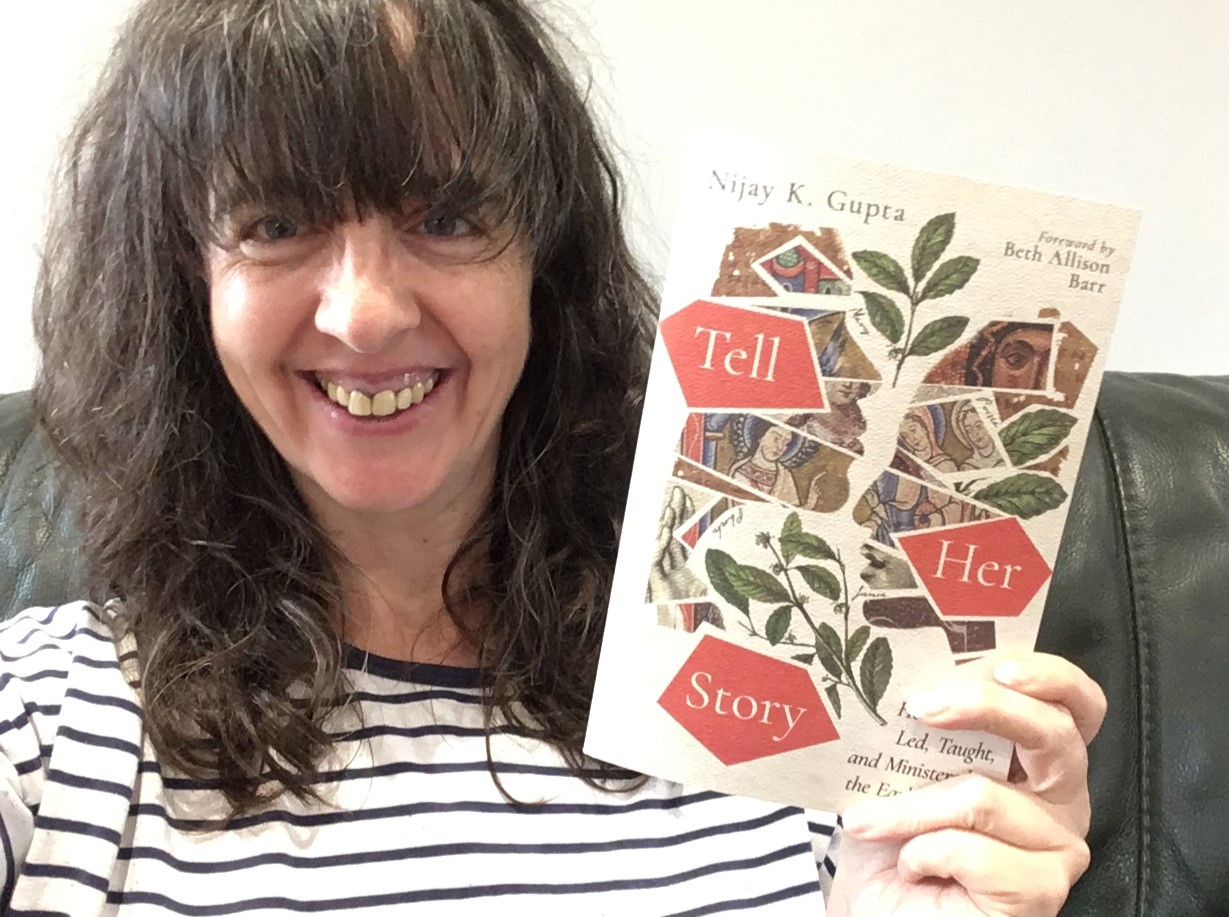
However this competition caught my eye for two reasons. One was the prize: a book about the women who led and ministered in the early Church: right up my proverbial street! The second reason was that the piece of writing to be submitted was a maximum of only 75 words! Nothing too taxing, surely?! I know: micro-writing requires great skill and can actually be more demanding than writing thousand-word pieces. But I figured overthinking 75 words would be less painful than overthinking hundreds or thousands more. So I had a look at the subject.

Hmmm. There are many Bible characters – female and male – who I identify with at different points in my life, so there wasn’t an immediate choice that sprang to mind. But as I considered it further, I thought of Abigail from 1 Samuel 25. Abigail is someone whose story I had read recently and who always inspires me. I scribbled down a few sentences, played around with them, and made sure they didn’t exceed the 75-word limit – and then ran out of time to do anything more so I sent it off, still thinking it wasn’t very good, and expecting someone else to win, but congratulating myself for at least not quitting before I started.

Imagine my total shock when I received a message from Sue saying I had won!!!


‘ll share my entry below so you can read it for yourself, but I wanted to also share what judge (who received the entries without the authors’ names attached) said about it – and what I gained from the experience, other than a lovely new book.

Judge Jean Perry (Suffolk artist) wrote, “For me, there was an easy winner as the writing stood out as meeting most of the criteria… The lady who wrote about Abigail made it personal, humorous and authentic. I felt her short summary was very well argued, giving both a critical view of the subject and a fresh way of looking at submission and courage from a woman’s perspective. Her writing inspired me to read the story again for myself and challenged me to have the faith and confidence to follow in Abigail’s footsteps.”

Well, that was encouraging – what a boost to the old confidence levels! It made me think again about imposter syndrome and that feeling of not being good enough, or as good as other “proper writers” (whatever that means). And it made me remember something I have resolved upon more than once already. Because excellence matters. Spelling, punctuation, and grammar matter. So do style, voice, flow… and all the other elements that are considered to be essential to good writing. And when I re-read my entry, I was horrified to spot errors in it. But that’s not all there is to a story. For it to be worth telling it has to carry a message. As I mentioned in my previous blog post, there is power in testimony. And that power does not come from the persuasiveness of the author, or how skillfully they tell the story. Sure, they need to have enough of a grasp of language to be able to communicate well, but what matters more is the message. As long as you or I can communicate well enough to make our point, that can be enough.

Those of us who are writing for God’s Kingdom are writing the true story of His goodness and transforming love. Yes we need to do our best to not trip the reader up with clunky syntax or poor spelling, so we need to get help from those in the writing community around us (more on that tomorrow). But if the heart of the message is God, then He Himself dwells in it. It doesn’t get better than that! Many of Jesus’ first disciples were not educated men (Acts 4:13), but they knew Him – and changed the world through their testimony. And personally speaking, I’d rather share a simple, unsophisticated story where Jesus’ love is the obvious focus than one where my style of writing gets the attention.

So that was my reminder to self. I don’t know if I’ll ever get to the point of thinking my writing is “good enough” or mistake-free, but I’ll try to keep reminding myself that ultimately it matters less than my subject. Give my substance over style, any day. I will give what I’ve got and trust God to use it. And if a few scribbled sentences can cause a competition judge to want to look at her Bible again, that’s more than a win for me!

So here it is, my super short, “not-very-good”, winning entry:

“I identify with Abigail.  Not because her husband was an idiot – mine isn’t. But because so much of traditional male-led Christianity still dictates that wives should prioritise submitting to their husbands, winning them over with their quiet godly conduct – making us responsible for men’s behaviour. It feels stifling, oppressive… impossible. Abigail was submitted and godly – yet praised for her wisdom in thinking for herself and refusing to submit to wrong. I love her.”

the power of telling your story

Yesterday I came back from youth camp. I spent five days in Shepton Mallett with about 3000 young people and a whole host of adults there simply to love on them and help them grow in faith: it was inspiring; it was energetic; it was loud; it was powerful… and it was exhausting.

I am having a gentle day today – not being a teenager any more, it takes me a little longer to recover from such revelry. As I sit on my comfy sofa with my dog dozing at my feet (he gave me a very enthusiastic welcome home and is not letting me move), I’m considering the many blessings that happened there. One of them in particular simply has to be shared here.

There were many brilliant speakers at camp, sharing powerful talks. But there was one stand-out moment for me, when a 70-year-old Jesuit priest received a spontaneous standing ovation that lasted several minutes. He wasn’t particularly dynamic in his presentation. In fact, when he started speaking I was concerned that he had lost the room, he was so softly-spoken and understated with his message. But then he started telling stories. His name was/ is Father Greg Boyle of Homeboy Industries, the world’s largest gang intervention and rehabilitation program (Wikipedia). And he simply shared the stories of some of the ‘homies’ who he knew and worked with, and how God had worked in their lives. He didn’t sensationalise anything – he didn’t need to; the stories were powerful enough in their stark simplicity. But as he spoke, the love of God was simply and powerfully communicated. Without fanfare, but through Father Greg simply sharing his stories, the Holy Spirit moved through the hearts of every person in the room – including the ones who had previously been struggling to connect.

When he stopped speaking there was a moment of stillness as he left the platform, as we all tried to process what we had heard; struggled to comprehend the palpable spirit of grace and love that had just been imparted. Then the applause started. The hosts came onto the stage to close the meeting, but the applause continued and grew into cheers. Like a tsunami it continued growing in intensity as waves of people all across the auditorium got to their feet and continued applauding. Of course we were cheering for Father Greg, in appreciation and recognition of what his ministry has achieved. But more than that, it felt like we were cheering for God Himself, for the love and compassion and liberty He has showered on those who society deems to be the worst of the worst. Of course the applause eventually came to an end on that day, but for those minutes that seemed to stretch outside time and into eternity, it felt like we connected with Him and each other and all of Heaven, applauding and praising God in a way that I have never experienced.

And it all came from the simple telling of stories. Imparting God’s transforming love to the listener/ reader, one story at a time.

That is the power of testimony.

PS You can read some of Father Greg’s stories in his book, Tattoos on the Heart. I’ve not read it myself yet, but am willing to recommend it nonetheless. I’ve ordered my copy, and can’t wait for it to arrive.

to question or not to question

My current Work in Progress is a devotional – sort of!

As with all my other books, I am not writing according to a format. Sigh, I do seem to make things difficult for myself, but as a Kingdom writer integrity to my message matters more to me than commercial success or marketability – hence the ‘sort-of’.

True devotionals seem to be presented as a set of daily readings – check.
Each one is usually based on a Bible verse or passage – check.
And each one is usually short – erm…
Mine aren’t exactly short. They are not exactly long chapters either, but there is good reason why I didn’t want a set of brief little readings this time. Each day contains a thought that is meant to go deep, to speak into real pain and/or need, and I couldn’t do that in just 100 brief words.

And the final characteristic common to many devotionals is that most of their chapters conclude with a set of questions designed to help the reader think deeper, study further, or apply the day’s thought to their life. I totally get why writers include them. But as a reader, I do not like them – they feel patronising and stifling, and often unrelated to the nuances of how God has spoken to me through it. So I usually skip right past them, but often with a residual sense of guilt that I haven’t read/ used the book properly. To be honest, I don’t read many devotionals – maybe for this reason.

So when I found myself writing a (sort-of) devotional, I really wrestled with whether to include these questions, jnowing that just because I don’t like them it doesn’t mean some readers might not find them helpful. They didn’t come naturally as I wrote, but a writer friend who I hugely respect encouraged me to keep trying, so I tried to add some at the end. I really, repeatedly tried – and kept hitting a block. And then I got completely stuck. I just couldn’t come up with anything that satisfied me. So I put out a few research questions on social media and in the writer groups I belong to (shout out to Kingdom Story Writers and the Association of Christian Writers – thank you all!) And the responses I received really helped me to filter my own thoughts. I think I have decided not to include questions in my WiP, and here’s why:

  • Many times these questions are too generic – they have to be, in order to apply to as many readers as possible. But that doesn’t leave space for truly incisive personal revelation.
  • This is not a book for baby Christians. I feel it would be disrespectful and unhelpful to spoon-feed my readers with set responses.
  • I personally believe God wants to speak to each individual person as they read. If I have done my job and landed the point I believe He wanted me to make, I must trust that the reader is already receiving a personalised blessing from Him and don’t need me interrupting that process with generalisations that could detract.
  • It’s not authentic to who I am as a writer. The whole of this book has been very – at times painfully – personal. It goes deep, to minister to people in dry, dark and difficult places. I don’t want to place a demand on those readers that could make them feel like a failure if they skip over it.

Basically, I want to trust the Holy Spirit to use the book as HE wants, to bless the reader and not make subconscious demands of people who may already be struggling.

So I think my decision is made, but I’d love to hear your thoughts: as a devotional writer why do you include these kind of questions, or not? And as a devotional reader why do you like them or not?

writing: the process

Unusually for me, I have embraced Lent this year, and have felt led to have a break from a few things including Social Media – especially Facebook – and TV. (But not blogging – hooray!) Primarily it was intended to help me focus on time with God, as is usually the case, and it is definitely helping with that. But one thing I hadn’t expected was that it would help with my writing. On day one of Lent I mentioned to God that I’m struggling a bit with my current WIP, and He suggested that I used some of the time I have freed up to discipline myself to write a chapter a day for the next 40 days.

Yikes! That sounded like a serious writerly commitment. And yet when I came to it yesterday and today (I’m very aware it’s still very early days), I found I was able to focus better and push through the usual obstacles, feeling like I had God’s blessing and agreement over it. So that’s what I’m doing – and writing it here so now I’m accountable to my lovely writer friends who I know won’t let me off the hook.

The WIP I’m focusing on is a devotional book. If anyone is unfamiliar with the term, it means a collection of relatively short writings intended to help the reader grow closer to God. Often they take the form of daily readings spread over a set period of time. Sometimes they include written prayers or ideas for further study, but they always (the good ones anyway) base each chapter or reading on a verse or passage from the Bible.
So to my devotional. As with my previous books I have asked myself ‘who am I to be writing this when there are so many good writers and proper theologians out there who could do a better job?’ And ‘how am I supposed to tackle something so new’? Of course, when I ask myself such questions I never give myself a helpful answer. So then I asked God, who is far more helpful. And He reminded me about my ‘In The Secret Place’ blog where I have been writing for years, and suggested that I write it like a collection of blog posts all based around a similar theme. Well I know how to do that (as God knows full well). My blog-readers know that I am not a theologian not an expert in anything particularly, I just share the stuff that God and I chat about – and people seem to find it helpful. So here I am writing again.

And it occurred to me that it might be helpful (or at east entertaining when I look back in future) to try to capture my process – something I regret not doing with my previous books. I’m more of a pantser than a plotter, but I do find it helps to have a vague plan. So for this book I know my theme and the working title that will keep me focused. And the other day I wrote out a list of potential chapter headings with accompanying Bible verses. With those loose ideas in mind (I fully expect it will all flex and change as I progress), all that is left for me to do is write. This is where my inner pantser re-emerges. I can’t say I enjoy writing ‘by the seat of my pants’ without a proper outline for each chapter, but it’s all I seem to be able to do…

I take my subject and Bible reference and just start writing. I have enough experience with blogging that I don’t find it difficult to identify a start point, but then the chapter evolves like someone taking a walk with no idea of where they’re going to end up – kind of exploring for fun. I’d love to have more ordered thoughts so I could go from A to B to C in a straight line, but I don’t. I often don’t even know what the most important point is that I need to land on until I’ve rambled around it, writing far more words than I will end up with and taking several detours on the way that lead to dead-ends and make me retrace my step back to where the path was making sense. So I wander around in my writing until I find the destination, then review and figure out which parts of the journey were important and which were unnecessary and need editing out so as not to confuse my readers. It doesn’t seem very efficient to me, but then God reminds me that in real life I’m the kind of person who enjoys exploring somewhere new far more than repeating the best known, most well-used trails every time – it’s the adventure of not knowing what I’m going to discover, the challenges I might need to overcome, and the surprise blessings I might discover that all keep me exploring. And when you have God as your trail guide, everything feels both safer and more fun.

So as much as I love the idea of becoming a more proficient writer, able to neatly get from A-to-B-to-C without unnecessary detours that make for more work in the editing process, I have to acknowledge that the fun of the ramble seems to balance it out. I suspect I will remain a pantsing writer-who-wanders after all.

PS So that’s a chapter AND this blog post written today. And now I get to reward myself with a favourite pastime: creating photobooks out of the MANY photographs I have taken. I love the process of throwing all my favourite photos onto a page and then figuring out which ones actually go together and which ones might look good but don’t actually fit anywhere, so have to be edited out. Hmmm… I spy a theme…

writing kingdom stories

I know, I’m hopelessly unreliable at writing regularly here, but although I regret that, I have to admit there are a few good reasons…
1/ Most of my time is taken up with home educating – at GCSE level this is particularly intense.
2/ I’m trying to use my spare time to get book no 3 written.
3/ Any blogging I do is usually on my other, older ‘In the Secret Place’ blog about the stuff that God and I chat about (but even that hasn’t had much content lately).

So this little blog about my writing antics does often feel sadly neglected. HOWEVER that does not mean there’s nothing going on… it just means I have to get my priorities in order and accept that it’s not always possible or even right to do everything a ‘proper writer’ is supposed to. I was reminded of that very recently…

You see, after The Jesse Tree Anthology was published last September, throughout October and November I did my best to embrace the realm of marketing. I felt a duty to promote the hard work of all the amazing writers who contributed, but there was also an element of “this is what you have to do as a writer”.  So almost every day I created new graphics and plastered Instagram with them, wringing all I could out of every single hashtag.  I quite like the creative part – it can be fun – but the pressure to keep it up was intolerable, and by December I was exhausted: I simply couldn’t manage another one. I figured most people who wanted an Advent study would have bought it by then, and with that reasoning I came to a crashing halt. A totally broken full-stop. Not ideal, but that’s where I was.

After about a month of much-needed rest with family over Christmas and the New Year, I reflected on how soul-destroying it had come to feel, and I realised that in taking advice about successful writing, promoting & marketing, some of it had become more of a burden than a help. It’s not that it was bad advice, just that I had let it take precedence over my own needs, stealing my peace – never a good idea. So I prayed and asked God for his advice, and as part of that conversation with God He reminded me why I had started writing in the first place: to make Him known. I remembered the freedom I had felt in choosing self-publication over the world’s ideals, and the joy I had found in writing for the Kingdom rather than the pressure of trying to be a “professionally successful writer”. And I resolved – again – to only follow writerly advice IF it lined up with what I felt God had asked me to. I have peace again. Thank You, God.

But not only that – I now also have support…
I have joined a group called “Kingdom Story Writers”. The group was formed out of the amazing retreat that I went on last year, where I first felt that freedom to write for God’s Kingdom rather than for “success” by any other terms. Since then I have stayed in touch with the leaders and some of the other writers there, and am delighted to have been invited to be part of a group established specifically to encourage other writers with the same Kingdom-priority in writing. It’s early days, but we’re establishing a website, a Facebook Group, a regular podcast, and… another retreat – hooray! All for the purpose of encouraging and helping other Kingdom writers, whether they write fiction, memoir, devotionals or other works that are all part of God’s great story. Keep an eye out for the link here on my website in case you’d like a look!

And meanwhile, I hope that whatever your passion or calling from God, you never become overwhelmed in it with worldly advice or ‘shoulds’, but that You know His leading and have His peace in all that you do! Amen x

blessings from Book Blest

This weekend I attended my first ever literary festival as an author, at Book Blest in Stroud, Glos. I didn’t really know what to expect. I did my best to gauge a reasonable amount of books to take (not so many that I’d pull a muscle carrying them in, but enough that I hopefully wouldn’t sell out), I dreamed up a competition that I hoped would garner interest, and I purchased a cash box in case people wanted to pay by cash. But still, I had no idea how many books – if any – I would actually sell.

On my first day – Friday – I sold one book. Actually I should say my friend and fellow-author who was on the table next to me sold one of my books. A browsing customer asked about my books and I, feeling somewhat awkward about promoting my own work, muttered a very brief and embarrassed precis. My friend took pity and came to my aid, giving a simple but clear overview of the Jesse Tree Anthology, and the customer was delighted to buy a copy. It was the first of several lessons I was blessed by this weekend, that I hope to remember…

Lesson one: you don’t have to be a pushy salesperson, but you do need to believe in your books and be ready to talk about them positively when people are interested.

The next morning as I walked along the road from the carpark to the venue, chatting with God as I went, I “humbly” told him I didn’t mind whether or not I sold books – I was there for the learning experience. Immediately I ‘heard’ His amused reply: “Oh, so you don’t want to ask me for sales, then?” I hastily backtracked, feeling foolish, and said that yes please, I would like some book sales too! That day I sold seven more copies to customers and an additional six to the local bookshop, then one of the anthology contributors at the festival took ten copies to sell, and when I got home, I found I had sold five more copies in America (unrelated to the festival) AND another contributor had ordered 87 copies! At that point I laughingly told God he was just showing off… but lesson learned!

Lesson two: God cares about our business success! Asking Him for help with it isn’t shameful, it’s wise!

So yes, the book sales were a definite benefit of the festival, but there was so much more besides. For example, one of my customers said she hosted a radio show and would love to promote the Anthology in her Advent programmes. Another said he was part of a much larger group who he would be happy to recommend the book to.

Lesson three: We can’t measure the success of value of an event just by sales alone. We never know the ripple effect that can happen as a result of selling a single book, and where it might end up.

But even more than the book sales, was the greater blessing of being with the people: chatting with fellow writers and enjoying the fellowship of a shared experience, and listening to the inspiring stories of how God had led them all on different paths of overcoming adversity, in order that they might publish their stories to encourage others. Also in chatting with the customers, hearing their life experiences and feeling the thrill of knowing that God was able to speak to them through my books – that blessed me so much more than the sales.

Lesson four was more of a reminder than a lesson, but still worth remembering: any event/ any book is far more about the people there/ the readers, than anything else.

Finally my final lesson (that I am able to identify right now) came from my ‘spotlight’ slot: 25 minutes of being interviewed on the front stage. The lovely host, Rev. Jo, had sent me some questions in advance so I could feel prepared, but we had also agreed that other questions might pop up. I was happy to go ‘off-piste’. But then when chatting about Friend of God, she asked an unplanned question about what friendship with God is like. I momentarily panicked, and then managed to say something about the Old Testament call to people to walk with God, and the New Testament message from Jesus that he wants us to know him: ie, that true Christianity is about relationship, not religion – which is rapidly becoming my life’s message. It was such a good question, I was a bit cross with myself, feeling my answer hadn’t done it justice, but just hoped that God had managed to speak through my words anyway.

The next morning back home, I was thinking about Jo’s question again, and chatting with God about why it was still niggling at me. I realised (or rather he showed me) it was very significant because of the subject. What friendship with God is like – and how to experience it – is the whole point of my next book. It’s a huge subject that I’m still processing and trying to figure out how to communicate, so I don’t have the answer in simple form yet (hopefully I’ll get there by the time I finish it!) But I am so glad Jo asked it, as it reignited the passion in me to write the next book. I had got a bit stuck and bogged down in trying to outline the structure, but I realised it’s more important at this point just to write down the essence of what needs to be said, and then tidy it up afterwards. I feel re-envisioned.

Lesson five: Keep writing! And when you lose track of what you are writing, go back to why: Why does it matter? Why bother? Passion really can inspire a fresh flow when words dry up.

So those were my blessing/lessons – my “blessons”? – from BookBlest this weekend. It was such a rich time, I’m really grateful especially to the organisers, and to my fellow stall-holders and customers, and most of all to my friend God, for my time there!

my lovely Book Blest stall

what comfort zone?

Ooops! I seem to have left rather a long gap since writing my last blog post here. Time really flies when you’re having fun/ editing a book/ writing another book/ educating a child at GCSE level!

When I wrote my last anthology-related post back in April (! again – oops!), I shared about the new journey I was taking, of editing the work of others…
As with most authors, writing and publishing my first book had taken me far out of my comfort zone. But where most people might then then take the time to write a second book and consolidate their learning/ growth, here I was branching out at speed, moving into compiling and editing the work of others. It felt unreasonable, brazen, and somewhat premature. And yet that is what I found myself doing. To begin with, even though there were challenging steps to take, it had mostly been so straightforward to organise that it felt like it had its own momentum. I only really stopped to draw breath in April, when I suddenly realised I was now responsible for suggesting changes to the work of authors who I really respect (and who had been writing for far longer than me)!

Happily for me, the writers involved in the anthology are a beautiful bunch of people, all of whom took my suggested edits with good grace. Where issues arose, often because I hadn’t communicated the vision clearly enough, we kept at it until we reached mutual understanding. Only one author (two if you count the one who dropped out right at the start) felt the need to withdraw through the process, but there is no bad blood between us as a result, which is most valuable to me. I am so grateful for the patience and good will of all those involved!

Once the author contributions were in, I added the questions and optional prayer suggestions that provide a sense of continuity throughout, and then I reached the part that I had been subconsciously avoiding since the very start: how to illustrate it. I knew the book needed illustrations if it was going to reach its full potential. But here I was stuck, because it was completely new territory: how do you find an illustrator, and how do you decide what do pay them? Do they take their fee up front, or as a percentage of the sales? Either way was a problem, really: I had no money to pay anyone up front, and couldn’t bear the responsibility of ‘what if I don’t sell enough books to make it worth their time?’ But neither could I bear the thought of asking a stranger to do the illustrations for nothing but ‘exposure’. Asking the authors to provide a single short piece of writing had felt audacious enough – I couldn’t bring myself to ask someone to do multiple pieces of art for free! Eventually I came to the place of realising what I had been subconsciously wrestling with the whole time: I was going to have to do it myself!

This was not just leaving a comfort zone: this was leaving it so far behind me that it was completely out of view! I am NOT an artist! Every step of the way I argued with myself, questioned what I thought I was doing, and repeatedly decided I couldn’t do it. But once I had seen the vision of how I wanted it to look, I couldn’t settle for anything less, so that vision persistently wore away at my arguments and daily irritated me enough to just keep trying. It has taken me all summer. But yesterday, I finally finished. The illustrations are not fine-art: they are very simple, as per my vision. And I’m still not an artist – I doubt I’ll ever do anything like this again – but it’s done.

The comfort zone I used to love, of never trying anything that might fail – or if I did, I did it in secret so no-one would know – has been obliterated. In the course of a year I have become a published author, and am about to become (watch this space) a published compiler, editor and illustrator too! Unbelievable! So resisting the temptation to make this into a preach about the growth-zapping dangers of comfort-zones, I just want to encourage anyone considering trying something new today: give it a go! You might surprise yourself with what you can do…

Image by Vanessa SG from Pixabay

kingdom writer

Yesterday I came back from my first ever writer’s retreat. I’d considered going on retreats before but was always put off because of that vague but persistent feeling of not being a ‘proper writer’. Yes, kind of like imposter syndrome, but also not quite. It’s true that in my head ‘proper writers’ write full time and earn a living from it, are published by traditional publishers, win literary awards and are generally recognised for their brilliance. All of which appeal to my vanity, and none of which actually apply to me. But it’s not just an inferiority complex. During and since coming back from the retreat I’ve been mulling over and trying to pin down why I feel so different, and I think I’m getting somewhere…

You see, the retreat was specifically for “Kingdom writers”. It wasn’t a term I’ve heard before and I wasn’t exactly sure what was meant by it, but it appealed in a way that no other writerly label has done so far. Largely this is because in the past few years of reading my Bible the biggest thing that has really stood out to me is how Jesus hardly ever mentioned “church” (only three times, and two of those were part of a single conversation). However, he spoke about Kingdom ALL THE TIME. It was a huge deal to him. So since then I have been on a mission to learn more. And when I started looking into the idea of a writing retreat this year, and my writer friend told me the focus of this one, it felt like a match made in Heaven. So I went.

I could wax lyrical about everything that happened there, and how richly nourished I was by my time there, but maybe that’ll appear in another blog post – or maybe I’ll save it for the feedback form! For now I just wanted to explore what the term means to me (mental note: I must ask the organisers for their definition), and why it is helping to peel away the layers of feeling so different to ‘proper’ writers…

I’ve written here before about ‘doing it all wrong’ and ‘the things I didn’t know’ – and I know I’m not alone among writers in feeling like everyone else is an expert except me. But there’s more to it than just imposter syndrome. When I published my first book I felt I had a choice to make about the kind of writer I wanted to be. I submitted my manuscript to a recommended publisher, and the feedback I received was excellent: how I needed to change certain aspects and focus more on the more sensational parts of my story, and aim at a more specific audience. All these things would have made my book more marketable, and I completely understand why that had to be the priority of a publishing business. But it was just not why I wrote it. My message – of friendship with God – was much less marketable, it’s true, but it was the whole point of writing the book. So I consciously chose NOT to be the kind of writer who prioritises marketability. It’s not that I don’t care – I sought and received help in making the book as good as I could. But many of the things that ‘proper writers’ learn about marketing: what to include if you want to write a best-seller, how to monetise your social media, creating a memorable brand etc, I could not care less about. That’s not why I write. And it is not how or why I want to write.

I know, I sound hideously naive, and I am sure I still have a lot to learn about marketing from a Godly perspective: I believe in my message, so I know I need to be wiser and bolder about getting my book(s) in front of readers. But there are many brilliant writers out there who excel at informing, entertaining and offering escapism, and writing in a way that the world values and applauds. And that’s great for them. It’s just not me. Yes, part of me still vainly loves the idea of winning literary awards, but really there is only one thing that satisfies me: the one reason why I write – and it’s to share the beautiful truth of God’s Kingdom with all who need the hope it offers.

So there you have it. Whether or not that makes me a ‘proper writer’ is not really the point any more. I’m not interested. It is both my ambition and my delight to call myself a Kingdom writer.

the things i didn’t know

When I was writing my first published book, I came to feel that the process of seeing it through to publication was as much about developing me as a person, as it was about helping others through what I had written. It made me dig deep to persevere when things got tough; it revealed hidden fears, endless overthinking, and multiple other issues that needed conquering if I was to get my book out there. But I did it, and even if nobody ever benefitted from reading it (though thankfully many say they have), it was helpful in terms of my own personal growth.

Little did I realise that that growth was not a one-time deal. Now I am actively working on my second book, I am beginning to suspect that every book may turn out to be a journey of self-discovery and growth. Especially as this book is so different to my last one. Now I am compiling and editing an anthology, motivating myself to keep writing in splendid isolation is now a very small piece of my workload. My book now revolves around working with others, and that depends on one main thing: good communication, which is an area where my hopes are high but my actual confidence is very low.

First I had to overcome my own feelings of insignificance to approach those I wanted to invite to contribute. And then I had to overcome a horror of nagging to follow up with those who didn’t get back to me with a decision. But somehow I did it, and ended up with a brilliant line-up of contributors.
Next I had to clearly communicate my vision and the parameters involved (word count, target audience) etc, send a contract to every writer, and set a deadline for their submissions. For someone with a strong aversion to being too demanding, this felt like it was killing my flesh every step of the way. Thankfully I am working with some truly lovely people, and there have not been any issues. So far so good.

Now though, I have reached an even harder part (why did I not foresee all these challenges to begin with? It’s probably just as well, or I might not have done it!) Submissions are coming in from the other authors… and I now have to edit them! This means sending back notes regarding places where I feel clarification is needed, or simplification, or where the over-all message of the book needs to be stronger, etc. In short, it means criticising (however constructively) the work of people who I admire – whose writing I really respect! I’m no stranger to editing & critiquing – I’ve helped multiple friends with their writing over the years – it’s just that I hadn’t quite twigged that I would be doing the same to published authors this time, and that is much more daunting. The question of “who do you think you are” looms over me like a giant, constant spectre.
I don’t think I’m anybody, truth be told. But I do feel passionate about this book – like it’s something that I’ve been called to write. And so I dig out my metaphorical big-girl-pants again, take a deep breath, and push through the fears of ‘what if I offend them?’, ‘what if they drop out as a result?’, ‘what if I mess it up by failing to communicate clearly?’, ‘what if they get really discouraged?’, ‘what if they think I think I’m better than them?’, ‘what if they write me off as a result?’

Compiling and editing an anthology is not for the faint-hearted. Neither is it for the highly-sensitive over-thinkers like me. But I never have been one to take the easy road. And thankfully my illusory big-girl-pants are really quite miraculous and seem to have an in-built corset with a steel-enforced spine to prop me up and keep me going when all the things I didn’t know come to try and put me off (I’m pretty sure those ‘big-girl-pants’ are just the Holy Spirit in imaginary disguise). Because writing and publishing – just like life itself – is a process. It might be a bit scary at times, but the things we don’t know – about life, or about ourselves – are there to be learned and overcome, as we continue to grow.

Lecture to myself over…

*Takes a deep breath – and keeps going…